|
Zacharias Kunuk
Zacharias Kunuk (, born November 27, 1957) is a Canadian Inuk producer and director, most notable for his film '' Atanarjuat: The Fast Runner.'' It is the first Canadian dramatic feature film produced entirely in Inuktitut with an all Indigenous cast. He is the president and co-founder of Igloolik Isuma Productions, Canada's first independent Inuit production company. His co-founders are Paul Qulitalik, Paul Apak Angilirq, and Norman Cohn (the only non-Inuk team member). ''Atanarjuat: The Fast Runner'' (2001) was named as the greatest Canadian film of all time by the 2015 Toronto International Film Festival poll. Background Zacharias Kunuk was born in Kapuiviit (Jens Munk Island) on Baffin Island, Nunavut (then part of the Northwest Territories), Canada. In 1966, he attended school in Igloolik. There he carved and sold soapstone sculptures to afford movie admissions. As his skill improved, he was able to buy cameras and photographed Inuit hunting scenes. When he heard ab ... [...More Info...] [...Related Items...] OR: [Wikipedia] [Google] [Baidu] [Amazon] |
Kapuiviit
Kapuiviit (Inuktitut syllabics: ''ᑲᐳᐃᕖᑦ'') formerly Jens Munk Island, for Dano-Norwegian explorer Jens Munk, is one of the Canadian arctic islands in the Qikiqtaaluk Region, Nunavut, Canada. It is an uninhabited Baffin Island offshore island with an area of . The island presently has no permanent resident population (since displacements driven by colonialism took place in the 1950s and 1960s) but it remains an important outpost camp in the Igloolik Island area. Historically, however, it was the location of Kapuivik, a hunting camp which is now an important archaeological site for the research of pre-Inuit peoples including the Dorset (Tuniit), Pre-Dorset and Paleo-Inuit. Kapuivik was also the birthplace of noted film director Zacharias Kunuk. [...More Info...] [...Related Items...] OR: [Wikipedia] [Google] [Baidu] [Amazon] |
Igloolik
Igloolik ( Inuktitut syllabics: , ''Iglulik'', ) is an Inuit hamlet in Foxe Basin, Qikiqtaaluk Region in Nunavut, northern Canada. Because its location on Igloolik Island is close to Melville Peninsula, it is often mistakenly thought to be on the peninsula. The name "Igloolik" means "there is a house here". It derives from meaning house or building, and refers to the sod houses that were originally in the area, not to snow igloos. In Inuktitut the residents are called Iglulingmiut (the suffix ''miut'' means "people of"). History Information about the area's earliest inhabitants comes mainly from numerous archaeological sites on the island; some dating back more than 4,000 years. First contact with Europeans came when the British Royal Navy ships HMS ''Fury'' and HMS ''Hecla'', under the command of Captain William Edward Parry, wintered in Igloolik in 1822. The island was visited in 1867 and 1868 by the American explorer Charles Francis Hall in his search for survivor ... [...More Info...] [...Related Items...] OR: [Wikipedia] [Google] [Baidu] [Amazon] |
Neil Diamond (filmmaker)
Neil Diamond is a Cree-Canadians, Canadian filmmaker born and raised in Waskaganish, Quebec. Working with Rezolution Pictures, Diamond has directed the documentary films ''Reel Injun'', ''The Last Explorer'', ''One More River'', ''Heavy Metal: A Mining Disaster in Northern Quebec'' and ''Cree Spoken Here'', along with three seasons of ''DAB IYIYUU'', a series for the Aboriginal Peoples Television Network about Cree Elder (administrative title), elders. In the 2008 docudrama ''The Last Explorer'', Diamond explored the story of his great-uncle George Elson, a Cree guide who helped to map Labrador as part of an ill-fated 1903 expedition with Leonidas Hubbard and Dillon Wallace, and a return voyage in 1905 with Hubbard's widow Mina Benson Hubbard, Mina Hubbard. As of April 2011, Diamond is developing a project with Inuit, Inuk filmmaker Zacharias Kunuk about the 18th-century conflict between Cree and Inuit, which lasted almost a century. He codirected, with Catherine Bainbridge, an ... [...More Info...] [...Related Items...] OR: [Wikipedia] [Google] [Baidu] [Amazon] |
Cree
The Cree, or nehinaw (, ), are a Indigenous peoples of the Americas, North American Indigenous people, numbering more than 350,000 in Canada, where they form one of the country's largest First Nations in Canada, First Nations. They live primarily to the north and west of Lake Superior in the Provinces and territories of Canada, provinces of Alberta, Labrador, Manitoba, the Northwest Territories, Ontario, and Saskatchewan. Another roughly 27,000 live in Quebec. In the United States, the Cree, historically, lived from Lake Superior westward. Today, they live mostly in Montana, where they share Rocky Boy's Indian Reservation with Ojibwe (Chippewa) people. A documented westward migration, over time, has been strongly associated with their roles as traders and hunters in the North American fur trade. Sub-groups and geography The Cree are generally divided into eight groups based on dialect and region. These divisions do not necessarily represent ethnic subdivisions within th ... [...More Info...] [...Related Items...] OR: [Wikipedia] [Google] [Baidu] [Amazon] |
National Gallery Of Denmark
National may refer to: Common uses * Nation or country ** Nationality – a ''national'' is a person who is subject to a nation, regardless of whether the person has full rights as a citizen Places in the United States * National, Maryland, census-designated place * National, Nevada, ghost town * National, Utah, ghost town * National, West Virginia, unincorporated community Commerce * National (brand), a brand name of electronic goods from Panasonic * National Benzole (or simply known as National), former petrol station chain in the UK, merged with BP * National Book Store, a bookstore and office supplies chain in the Philippines * National Car Rental, an American rental car company * National Energy Systems, a former name of Eco Marine Power * National Entertainment Commission, a former name of the Media Rating Council * National Motor Vehicle Company, Indianapolis, Indiana, USA 1900–1924 * National Radio Company, Malden, Massachusetts, USA 1914–1991 * National ... [...More Info...] [...Related Items...] OR: [Wikipedia] [Google] [Baidu] [Amazon] |
Copenhagen Climate Summit
The 2009 United Nations Climate Change Conference, commonly known as the Copenhagen Summit, was held at the Bella Center in Copenhagen, Denmark, between 7 and 18 December. The conference included the 15th session of the Conference of the Parties (COP 15) to the United Nations Framework Convention on Climate Change (UNFCCC) and the 5th session of the Conference of the Parties serving as the Meeting of the Parties (CMP 5) to the Kyoto Protocol. According to the Bali Road Map, a framework for climate change mitigation beyond 2012 was to be agreed there. On Friday 18 December, the final day of the conference, international media reported that the climate talks were "in disarray". Media also reported that in lieu of a summit collapse, only a "weak political statement" was anticipated at the conclusion of the conference. The Copenhagen Accord was drafted by the United States, China, India, Brazil and South Africa on 18 December, and judged a "meaningful agreement" by the United State ... [...More Info...] [...Related Items...] OR: [Wikipedia] [Google] [Baidu] [Amazon] |
Inuit Culture
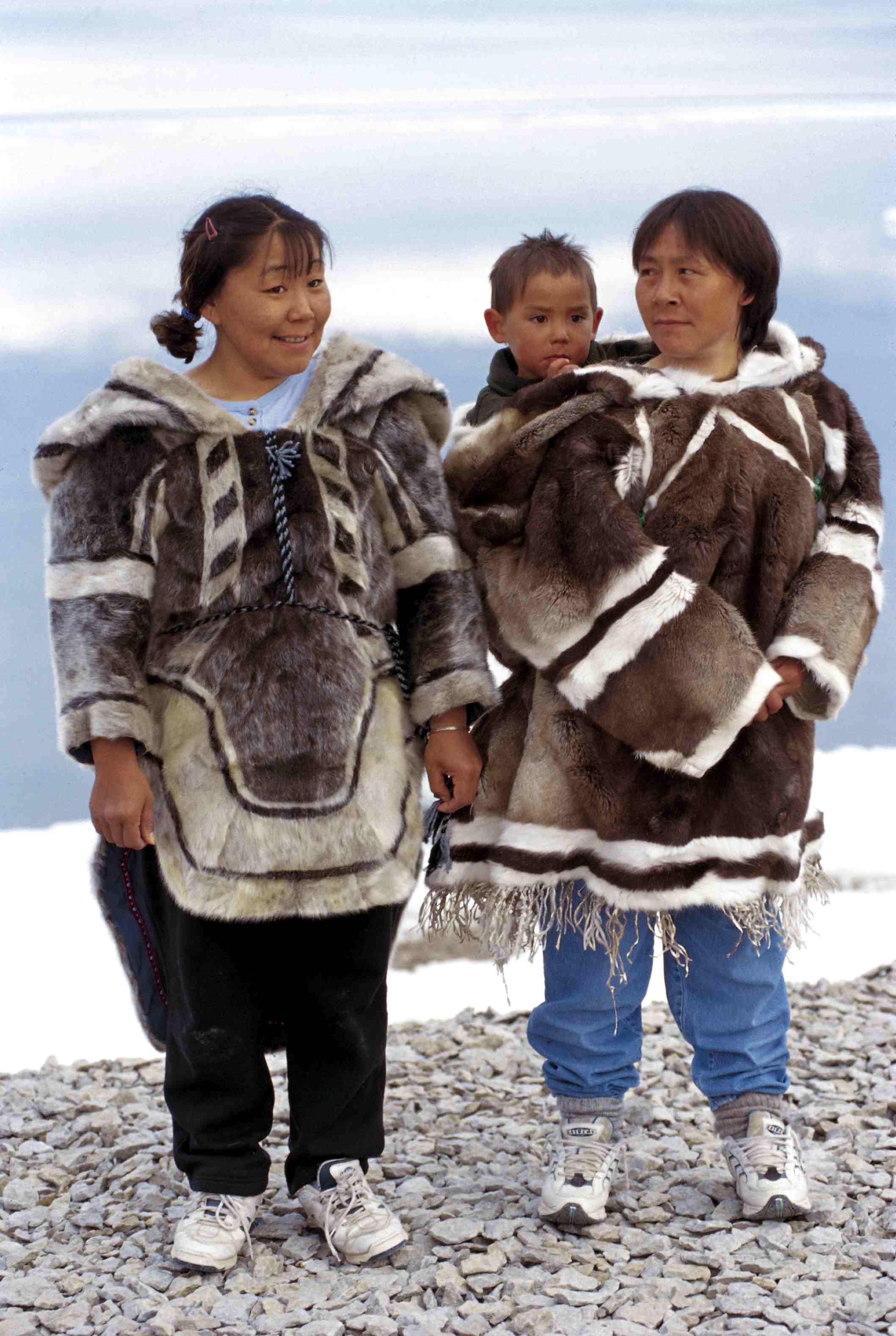
The Inuit are an indigenous people of the Arctic and subarctic regions of North America (parts of Alaska, Canada, and Greenland). The ancestors of the present-day Inuit are culturally related to Iñupiat (northern Alaska), and Yupik peoples, Yupik (Siberia and western Alaska), and the Aleut who live in the Aleutian Islands of Siberia and Alaska. The term culture of the Inuit, therefore, refers primarily to these areas; however, parallels to other Eskimo groups can also be drawn. The word "Eskimo" has been used to encompass the Inuit and Yupik, and other indigenous Alaskan and Siberian peoples, but this usage is in decline. Various groups of Inuit in Canada live throughout the Inuvialuit Settlement Region of the Northwest Territories, the Provinces and territories of Canada#Territories, territory of Nunavut, Nunavik in northern Quebec and Nunatsiavut in Labrador and the unrecognised area known as NunatuKavut. With the exception of NunatuKavut these areas are sometimes known as I ... [...More Info...] [...Related Items...] OR: [Wikipedia] [Google] [Baidu] [Amazon] |
Climate Change
Present-day climate change includes both global warming—the ongoing increase in Global surface temperature, global average temperature—and its wider effects on Earth's climate system. Climate variability and change, Climate change in a broader sense also includes previous long-term changes to Earth's climate. The current rise in global temperatures is Scientific consensus on climate change, driven by human activities, especially fossil fuel burning since the Industrial Revolution. Fossil fuel use, Deforestation and climate change, deforestation, and some Greenhouse gas emissions from agriculture, agricultural and Environmental impact of concrete, industrial practices release greenhouse gases. These gases greenhouse effect, absorb some of the heat that the Earth Thermal radiation, radiates after it warms from sunlight, warming the lower atmosphere. Carbon dioxide, the primary gas driving global warming, Carbon dioxide in Earth's atmosphere, has increased in concentratio ... [...More Info...] [...Related Items...] OR: [Wikipedia] [Google] [Baidu] [Amazon] |
University Of Victoria
The University of Victoria (UVic) is a public research university located in the municipalities of Oak Bay, British Columbia, Oak Bay and Saanich, British Columbia, Canada. Established in 1903 as Victoria College, British Columbia, Victoria College, the institution was initially an affiliated college of McGill University until 1915. From 1921 to 1963, it functioned as an affiliate of the University of British Columbia. In 1963, the institution was reorganized into an independent university. History The University of Victoria is the oldest post-secondary institution in British Columbia. First established in 1903 as Victoria College, an affiliated college of McGill University, it gained full autonomy and degree-granting status through a charter on July 1, 1963. Between 1903 and 1915, Victoria College offered first- and second-year McGill courses in the arts and sciences. Administered locally by the Victoria School Board, the college was an adjunct to Victoria High School (British ... [...More Info...] [...Related Items...] OR: [Wikipedia] [Google] [Baidu] [Amazon] |
Inuit Qaujimajatuqangit
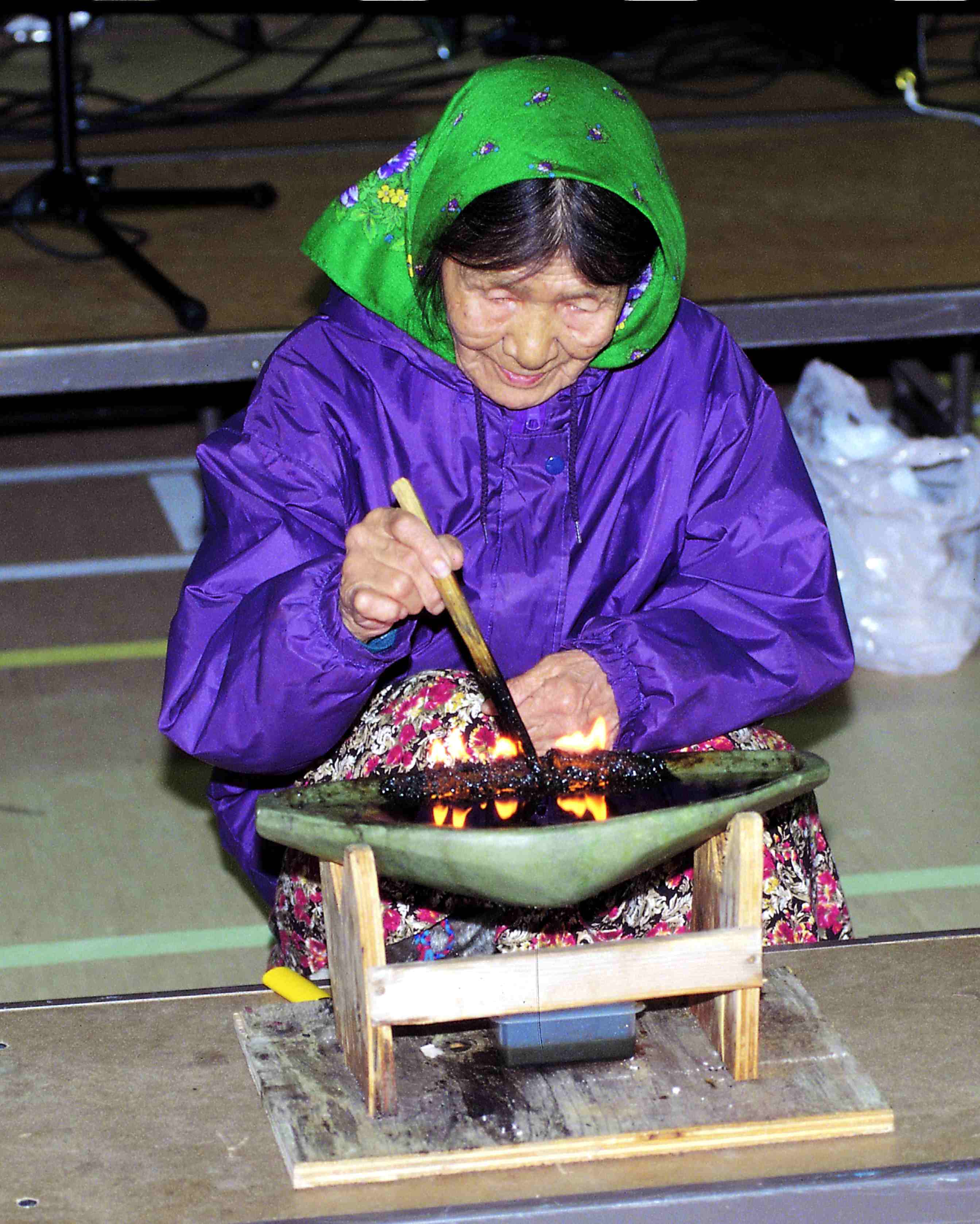
Inuit Qaujimajatuqangit ( /inuit qaujimajatuqaŋit/, Inuktitut syllabics: ᐃᓄᐃᑦ ᖃᐅᔨᒪᔭᑐᖃᖏᑦ; sometimes Inuit Qaujimanituqangit – ᐃᓄᐃᑦ ᖃᐅᔨᒪᓂᑐᖃᖏᑦ) is an Inuktitut phrase that is often translated as "Inuit traditional knowledge", "Inuit traditional institutions" or even "Inuit traditional technology". It can also be abbreviated as "IQ". It comes from the verb root "''qaujima-''" meaning "to know" and can be literally translated to "that which has long been known by Inuit". Traditional knowledge Inuit Qaujimajatuqangit is a body of knowledge and unique cultural insights of Inuit into the workings of nature, humans and animals. Inuit Qaujimajatuqangit, then, has both practical and epistemological aspects that branch out from a fundamental principle that human beings are learning, rational beings with an infinite potential for problem-solving within the dictates of nature and technology. According to the Government of Nunavut's 2013 doc ... [...More Info...] [...Related Items...] OR: [Wikipedia] [Google] [Baidu] [Amazon] |
Tundra
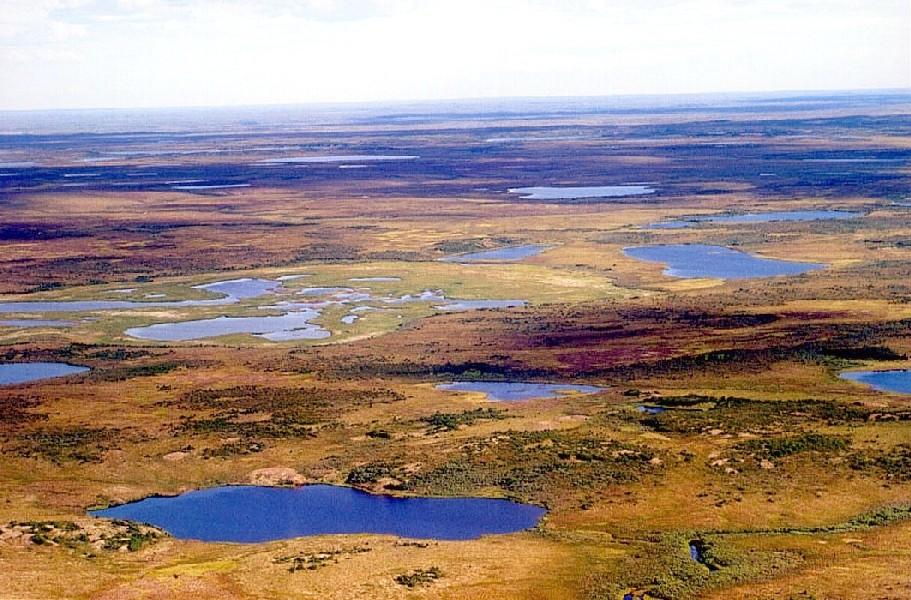
In physical geography, a tundra () is a type of biome where tree growth is hindered by frigid temperatures and short growing seasons. There are three regions and associated types of tundra: #Arctic, Arctic, Alpine tundra, Alpine, and #Antarctic, Antarctic. Tundra vegetation is composed of dwarf shrubs, Cyperaceae, sedges, Poaceae, grasses, mosses, and lichens. Scattered trees grow in some tundra regions. The ecotone (or ecological boundary region) between the tundra and the forest is known as the tree line or timberline. The tundra soil is rich in nitrogen and phosphorus. The soil also contains large amounts of biomass and decomposed biomass that has been stored as methane and carbon dioxide in the permafrost, making the tundra soil a carbon sink. As global warming heats the ecosystem and causes soil thawing, the permafrost carbon cycle accelerates and releases much of these soil-contained greenhouse gases into the atmosphere, creating Climate change feedback, a feedback cycle t ... [...More Info...] [...Related Items...] OR: [Wikipedia] [Google] [Baidu] [Amazon] |
Arctic
The Arctic (; . ) is the polar regions of Earth, polar region of Earth that surrounds the North Pole, lying within the Arctic Circle. The Arctic region, from the IERS Reference Meridian travelling east, consists of parts of northern Norway (Nordland, Troms, Finnmark, Svalbard and Jan Mayen), northernmost Sweden (Västerbotten, Norrbotten and Lapland (Sweden), Lappland), northern Finland (North Ostrobothnia, Kainuu and Lapland (Finland), Lappi), Russia (Murmansk Oblast, Murmansk, Siberia, Nenets Autonomous Okrug, Nenets Okrug, Novaya Zemlya), the United States (Alaska), Canada (Yukon, Northwest Territories, Nunavut), Danish Realm (Greenland), and northern Iceland (Grímsey and Kolbeinsey), along with the Arctic Ocean and adjacent seas. Land within the Arctic region has seasonally varying cryosphere, snow and ice cover, with predominantly treeless permafrost under the tundra. Arctic seas contain seasonal sea ice in many places. The Arctic region is a unique area among Earth's ... [...More Info...] [...Related Items...] OR: [Wikipedia] [Google] [Baidu] [Amazon] |