
World
The world is the totality of entities, the whole of reality, or everything that exists. The nature of the world has been conceptualized differently in different fields. Some conceptions see the world as unique, while others talk of a "plurality of worlds". Some treat the world as one simple object, while others analyze the world as a complex made up of parts.
In scientific cosmology, the world or universe is commonly defined as "the totality of all space and time; all that is, has been, and will be". Theories of modality talk of possible worlds as complete and consistent ways how things could have been. Phenomenology, starting from the horizon of co-given objects present in the periphery of every experience, defines the world as the biggest horizon, or the "horizon of all horizons". In philosophy of mind, the world is contrasted with the mind as that which is represented by the mind.
Theology conceptualizes the world in relation to God, for example, as God's creati ...
Earth
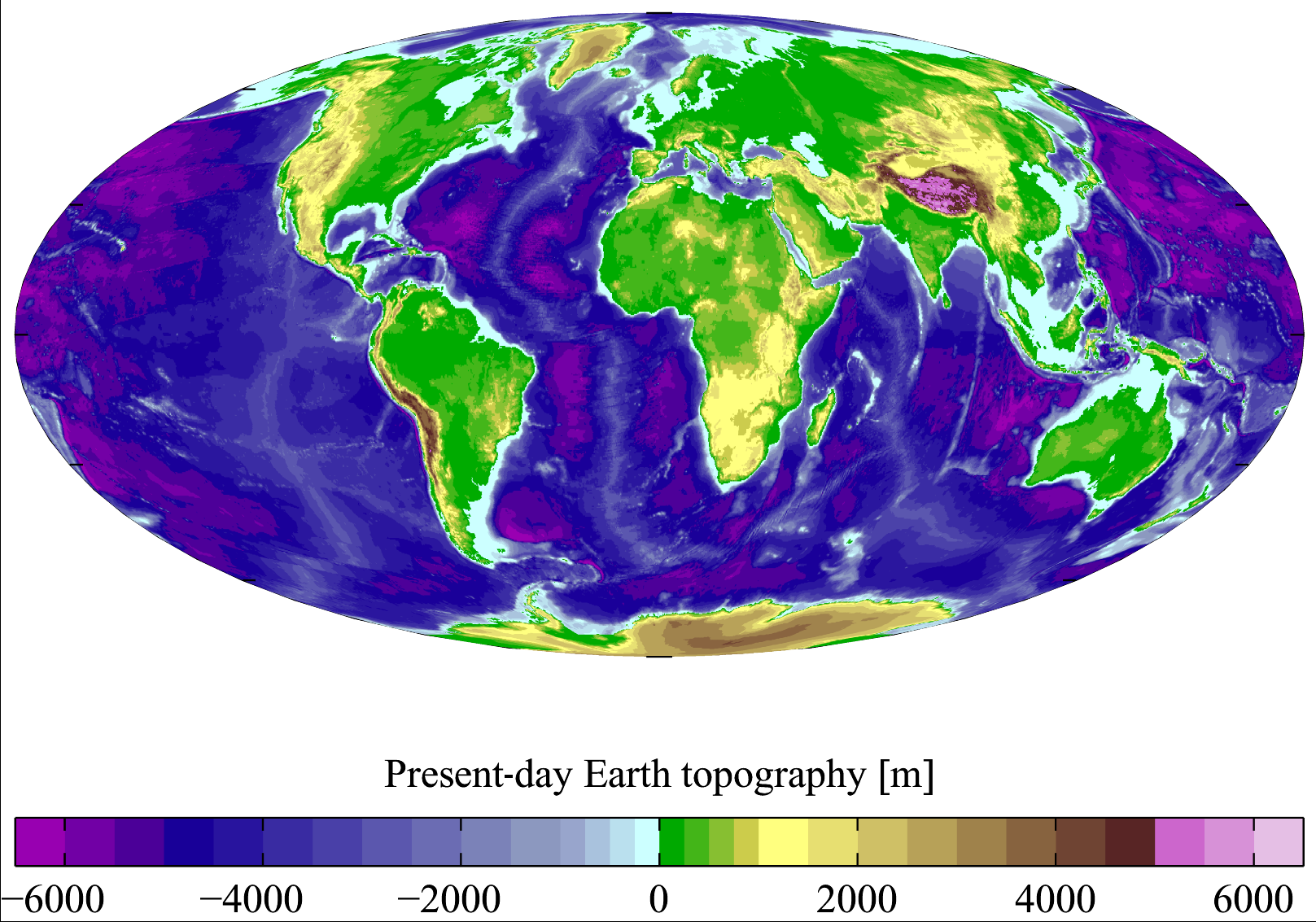
Earth is the third planet from the Sun and the only astronomical object known to Planetary habitability, harbor life. This is made possible by Earth being an ocean world, the only one in the Solar System sustaining liquid surface water. Almost all of Earth's water is contained in its ocean, which covers Water distribution on Earth, 70.8% of Earth's crust. The remaining 29.2% of Earth's crust is land, which is predominantly located within Earth's land hemisphere in the form of continental landmasses. Most of Earth's land is at least somewhat humid and covered by vegetation, while large ice sheets at Earth's polar deserts retain more water than Earth's groundwater, lakes, rivers, and Water vapor#In Earth's atmosphere, atmospheric water combined. Earth's crust consists of slowly moving tectonic plates, which interact to produce mountain ranges, volcanoes, and earthquakes. Earth has Earth's outer core, a liquid outer core that generates a magnetosphere capable of deflecting most ...
Religion
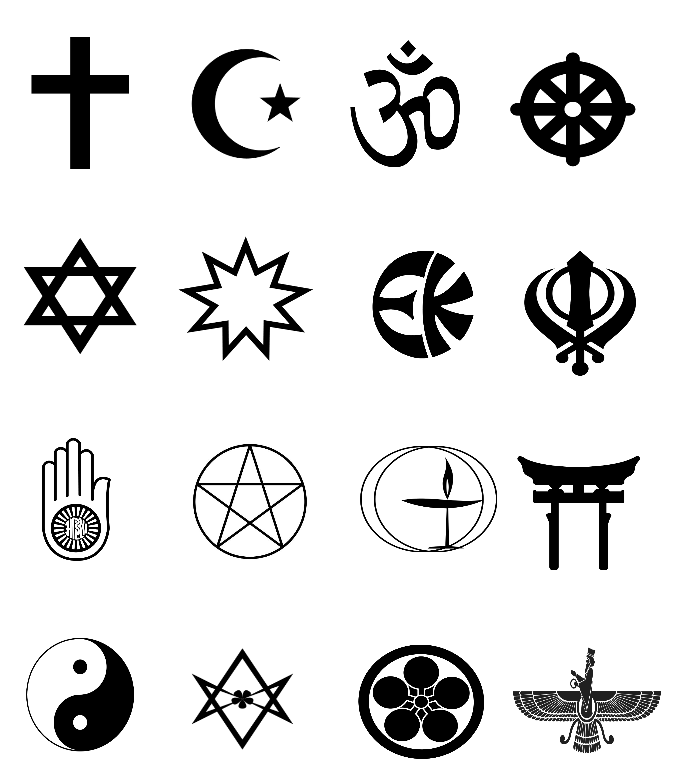
Religion is a range of social- cultural systems, including designated behaviors and practices, ethics, morals, beliefs, worldviews, texts, sanctified places, prophecies, or organizations, that generally relate humanity to supernatural, transcendental, and spiritual elements—although there is no scholarly consensus over what precisely constitutes a religion. It is an essentially contested concept. Different religions may or may not contain various elements ranging from the divine, sacredness, faith,Tillich, P. (1957) ''Dynamics of faith''. Harper Perennial; (p. 1). and a supernatural being or beings.
The origin of religious belief is an open question, with possible explanations including awareness of individual death, a sense of community, and dreams. Religions have sacred histories, narratives, and mythologies, preserved in oral traditions, sacred texts, symbols, and holy places, that may attempt to explain the origin of life, the universe, and other ph ...
_Aristotele_by_Francesco_Hayez_in_gallerie_Accademia_Venice_(cropped).jpg)
Reality
Reality is the totality of existence or what all existing entities have in common. It is often contrasted with appearance, opposing what is with what seems to be, although the accuracy and fundamentality of this contrast are disputed. Various criteria for distinguishing real from unreal entities have been proposed, including causal powers, mind-independence, and being non- illusory. The concept of ''reality'' overlaps with notions such as being, existence, world, actuality, and truth.
Debates about the constituents and structure of reality ask what kinds of things there are and how they are organized. Proposed constituents include particulars and universals, concrete and abstract objects, facts, events, and elementary particles. Structural questions address the relation between parts and wholes, the distinction between fundamental and non-fundamental entities, the idea that reality forms a hierarchy of levels, and the roles of unity and multiplicity in monist– pl ...

Eschatology
Eschatology (; ) concerns expectations of the end of present age, human history, or the world itself. The end of the world or end times is predicted by several world religions, which teach that negative world events will reach a climax. Belief that the end of the world is imminent is known as apocalypticism, and over time has been held both by members of mainstream religions and by doomsday cults. In the context of mysticism, the term refers metaphorically to the end of ordinary reality and to reunion with the divine. Many religions treat eschatology as a future event prophesied in sacred texts or in folklore, while other religions may have concepts of renewal or transformation after significant events.
The Abrahamic religions maintain a linear cosmology, with end-time scenarios containing themes of transformation and redemption. In Judaism, the term "end of days" makes reference to the Messianic Age and includes an in-gathering of the exiled Jewish diaspora, the comi ...