.jpg)
Agora
The agora (English: or ; , romanized: ', meaning "market" in Modern Greek) was a central public space in ancient Greek city-states. The literal meaning of the word "agora" is "gathering place" or "assembly". The agora was the centre of the athletic, artistic, business, social, spiritual, and political life in the city. The Ancient Agora of Athens is the best example.
Origins
Early in Greek history (10th–4th centuries BC), free-born citizens would gather in the agora for military duty or to hear statements of the ruling king or council. Later, the agora also served as a marketplace, where merchants kept stalls or shops to sell their goods amid arcades. This attracted artisans who built workshops nearby.
From these twin functions of the agora as a political and a commercial spot came the two Greek verbs , ''agorázō'', "I shop", and , ''agoreúō'', "I speak in public".
Ancient Agora of Athens
The Ancient Agora of Athens was situated beneath the northern slope of th ...
%2C_(Gigantomàquia_C)%2C_Museu_de_Pèrgam%2C_Berlín.jpg)
Zeus
Zeus (, ) is the supreme deity of the Greek pantheon. He is a sky and thunder god in ancient Greek religion and mythology, who rules as king of the gods on Mount Olympus.
Zeus is the child of Cronus and Rhea. In most traditions, he is married to Hera, by whom he is usually said to have fathered Ares, Eileithyia, Hebe, and Hephaestus.Hard 2004p. 79 At the oracle of Dodona, his consort was said to be Dione, by whom the '' Iliad'' states that he fathered Aphrodite. According to the '' Theogony'', Zeus's first wife was Metis, by whom he had Athena. Hesiod, '' Theogony'886900 Zeus was also infamous for his erotic escapades. These resulted in many divine and heroic offspring, including Apollo, Artemis, Hermes, Persephone, Dionysus, Perseus, Heracles, Helen of Troy, Minos, and the Muses.
He was respected as a sky father who was chief of the gods and assigned roles to the others: "Even the gods who are not his natural children address him as Father, and all the ...

Apollo
Apollo is one of the Olympian deities in ancient Greek religion and mythology. His numerous functions include light, healing, prophecy, music, poetry, and archery. He is the son of Zeus and Leto, and the twin brother of Artemis, goddess of the hunt. He is considered to be the most beautiful god and is represented as the ideal of the '' kouros'' (ephebe, or a beardless, athletic youth).
As the patron deity of Delphi (''Apollo Pythios''), Apollo is an oracular god—the prophetic deity of the Delphic Oracle and the deity of ritual purification. His oracles were often consulted for guidance in various matters. He was in general seen as the god who affords help and wards off evil, and is referred to as , the "averter of evil". Medicine and healing are associated with Apollo, whether through the god himself or mediated through his son Asclepius. Apollo delivered people from epidemics, yet he is also a god who could bring ill health and deadly plague with his arrows. T ...

Athens
Athens is the capital and largest city of Greece. A significant coastal urban area in the Mediterranean, Athens is also the capital of the Attica region and is the southernmost capital on the European mainland. With its urban area's population numbering over 3.6 million, it is the eighth-largest urban area in the European Union (EU). The Municipality of Athens (also City of Athens), which constitutes a small administrative unit of the entire urban area, had a population of 643,452 in 2021, within its official limits, and a land area of .
Athens is one of the world's oldest cities, with its recorded history spanning over 3,400 years, and its earliest human presence beginning somewhere between the 11th and 7th millennia BC. According to Greek mythology, the city was named after Athena, the ancient Greek goddess of wisdom, but modern scholars generally agree that the goddess took her name after the city. Classical Athens was one of the most powerful city-states in ...
Ares
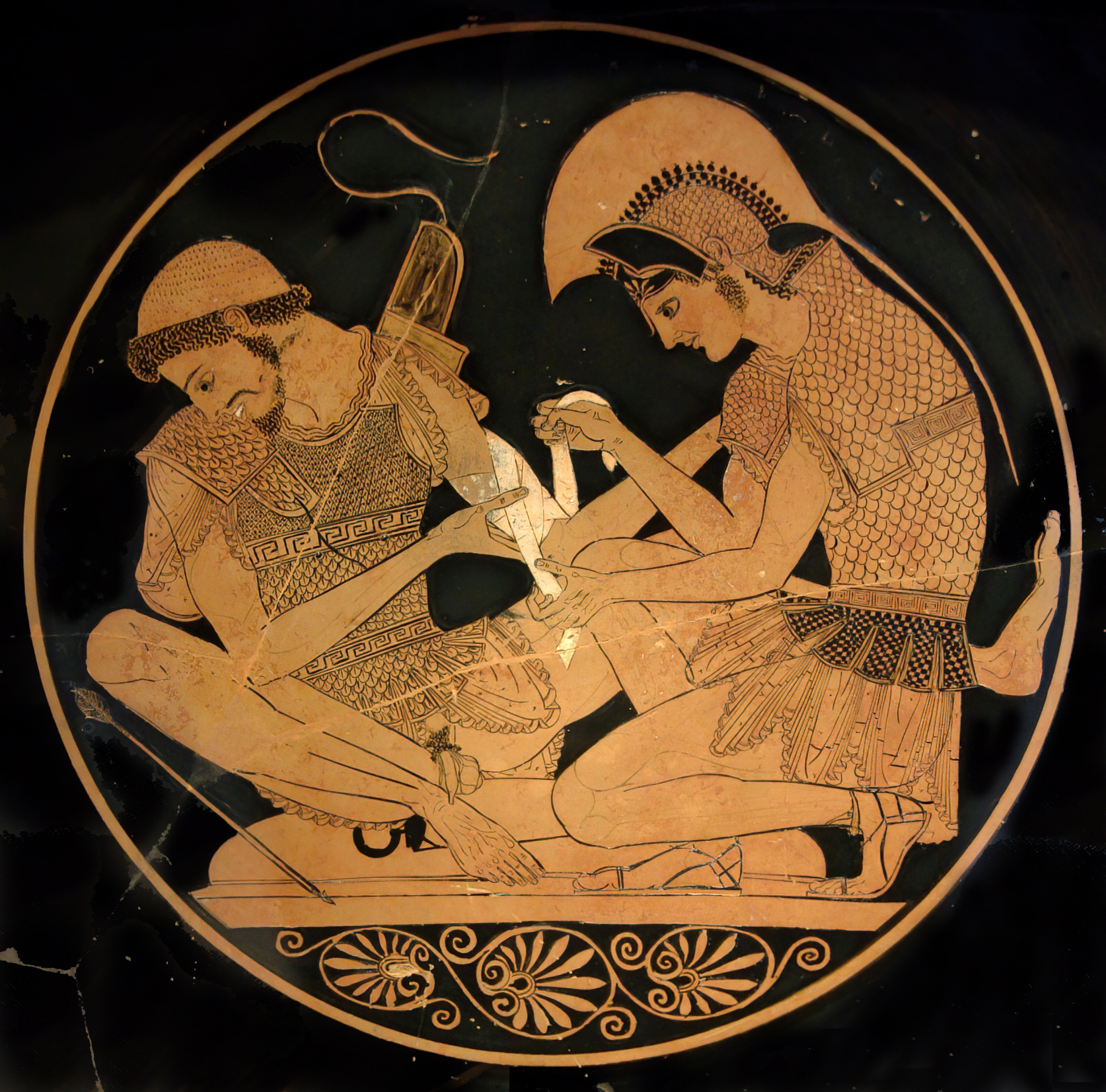
Ares (; , ''Árēs'' ) is the Greek god of war and courage. He is one of the Twelve Olympians, and the son of Zeus and Hera. Many Greeks were ambivalent towards him. He embodies the physical valor necessary for success in war but can also personify sheer brutality and bloodlust, in contrast to his sister Athena, whose martial functions include military strategy and generalship. An association with Ares endows places, objects, and other deities with a savage, dangerous, or militarized quality.
Although Ares's name shows his origins as Mycenaean, his reputation for savagery was thought by some to reflect his likely origins as a Thracian deity. Some cities in Greece and several in Asia Minor held annual festivals to bind and detain him as their protector. In parts of Asia Minor, he was an oracular deity. Still further away from Greece, the Scythians were said to ritually kill one in a hundred prisoners of war as an offering to their equivalent of Ares. The later belief that a ...

Artisan
An artisan (from , ) is a skilled craft worker who makes or creates material objects partly or entirely by hand. These objects may be functional or strictly decorative, for example furniture, decorative art, sculpture, clothing, food items, household items, and tools and mechanisms such as the handmade clockwork movement of a watchmaker. Artisans practice a craft and may through experience and aptitude reach the expressive levels of an artist.
History
The adjective "artisanal" is often used in describing hand-processing in contrast to an industrial process, such as in the phrase '' artisanal mining''. Thus, "artisanal" is sometimes used in marketing and advertising as a buzz word to describe or imply some relation with the crafting of handmade food products, such as bread, beverages, cheese or textiles. Many of these have traditionally been handmade, rural or pastoral goods but are also now commonly made on a larger scale with automated mechanization in facto ...
.png)
The
''The'' is a grammatical article in English, denoting nouns that are already or about to be mentioned, under discussion, implied or otherwise presumed familiar to listeners, readers, or speakers. It is the definite article in English. ''The'' is the most frequently used word in the English language; studies and analyses of texts have found it to account for seven percent of all printed English-language words. It is derived from gendered articles in Old English which combined in Middle English and now has a single form used with nouns of any gender. The word can be used with both singular and plural nouns, and with a noun that starts with any letter or sound. This is different from many other languages, which have different forms of the definite article for different genders or numbers.
Pronunciation
In most dialects, "the" is pronounced as (with the voiced dental fricative followed by a schwa) when followed by a consonant sound, and as (homophone of the archaic p ...
.jpg)
Colonnade
In classical architecture, a colonnade is a long sequence of columns joined by their entablature, often free-standing, or part of a building. Paired or multiple pairs of columns are normally employed in a colonnade which can be straight or curved. The space enclosed may be covered or open. In St. Peter's Square in Rome, Bernini's great colonnade encloses a vast open elliptical space.
When in front of a building, screening the door (Latin ''porta''), it is called a portico. When enclosing an open court, a peristyle. A portico may be more than one rank of columns deep, as at the Pantheon in Rome or the stoae of Ancient Greece.
When the intercolumniation is alternately wide and narrow, a colonnade may be termed "araeosystyle" (Gr. αραιος, "widely spaced", and συστυλος, "with columns set close together"), as in the case of the western porch of St Paul's Cathedral and the east front of the Louvre.
History
Colonnades (formerly as colonade) have been built s ...

Temple
A temple (from the Latin ) is a place of worship, a building used for spiritual rituals and activities such as prayer and sacrifice. By convention, the specially built places of worship for some religions are commonly called "temples" in English, while those of other religions are not, even though they fulfill very similar functions.
The religions for which the terms are used include the great majority of ancient religions that are now extinct, such as the Ancient Egyptian religion and the Ancient Greek religion. Among religions still active: Hinduism (whose temples are called mandir or kovil), Buddhism (whose temples are called vihara), Sikhism (whose temples are called gurudwara), Jainism (whose temples are sometimes called derasar), Zoroastrianism (whose temples are sometimes called agiary), the Baháʼí Faith (which are often simply referred to as Baháʼí House of Worship), Taoism (which are sometimes called daoguan), Shinto (which are often called ...